
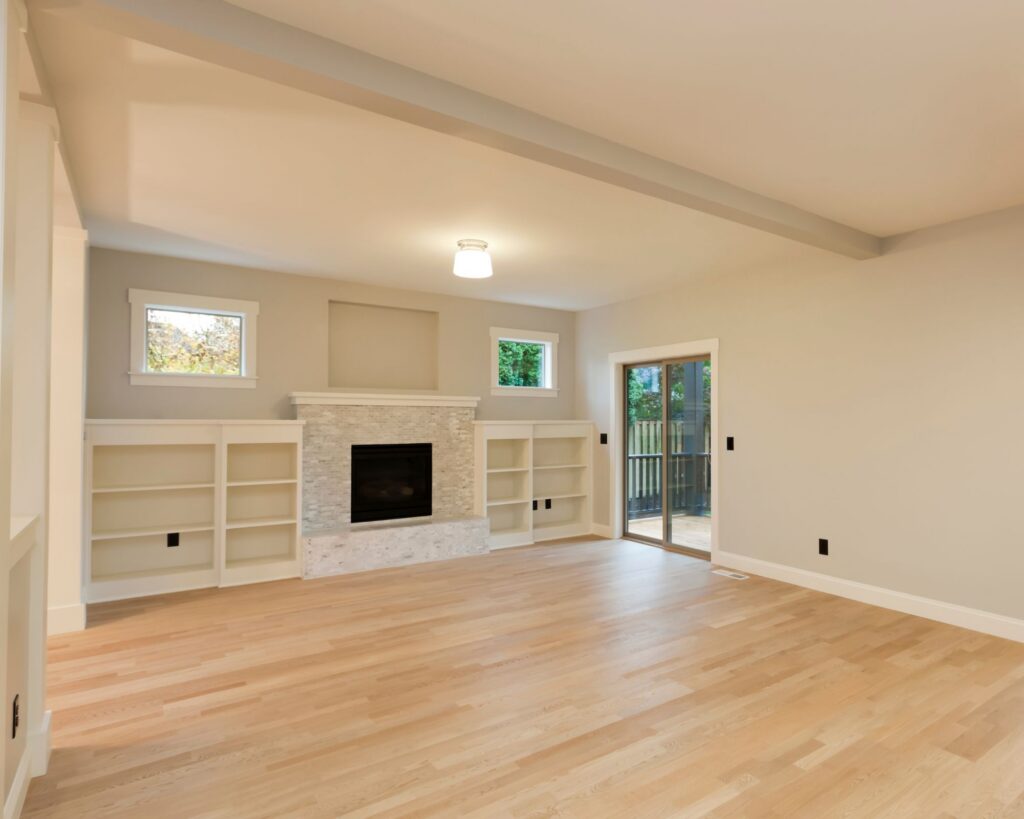
There is a specific kind of listing that goes quiet in Denver every November. It is vacant, it is priced correctly,
the photos are technically fine, and it just sits.The seller assumes it is the season. Sometimes it is. More often, it is the empty rooms.
Winter exposes an empty house
Denver’s winter market is not dead. Buyers who are looking in December are usually looking because they have to, which makes them some of the most motivated buyers of the year. What changes is not demand. It is the conditions your listing has to perform under.
Daylight is short, so showings happen at dusk or after dark. The light is flat and blue. Trees are bare, so the
exterior photos lose their softening. Buyers arrive in coats, track in salt, and walk faster.
An empty house handles none of that well. Bare rooms read as cold twice over: literally, because there is nothing absorbing sound or light, and figuratively, because there is nothing to hold a buyer’s attention for the twenty extra seconds that turn a walkthrough into an offer.
What buyers actually can’t do in an empty room
Sellers tend to think an empty house is a blank canvas. Buyers experience it as a test they are being asked to pass.
- They can’t judge scale. An empty 12-by-14 bedroom looks small. Put a queen bed, two nightstands, and a bench in it and the same room reads generous. This is not a trick; it is a reference point.
- They can’t find the floor plan. Open-concept main floors are the worst offenders. Without furniture, there is no visual boundary between “living” and “dining,” so buyers stand in the middle of a large room and feel vaguely unsettled.
- They can’t ignore the flaws. With nothing to look at, the eye goes straight to the scuffed baseboard, the outlet cover, and the patch of drywall that did not get a second coat.
- They can’t picture the life. The National Association of REALTORS found that 81 percent of buyer’s agents say staging helps their clients visualize a property as their own home. An empty room asks the buyer to do all of that work themselves, at 4:45 p.m., in the dark, in a coat.
The photo problem is a November problem
Forty percent of buyers schedule a showing after seeing a property’s photos online, per NAR. In June, an empty room shot at 11 a.m. with south-facing windows can look bright and airy. In November, the same room shot at the same time looks gray.
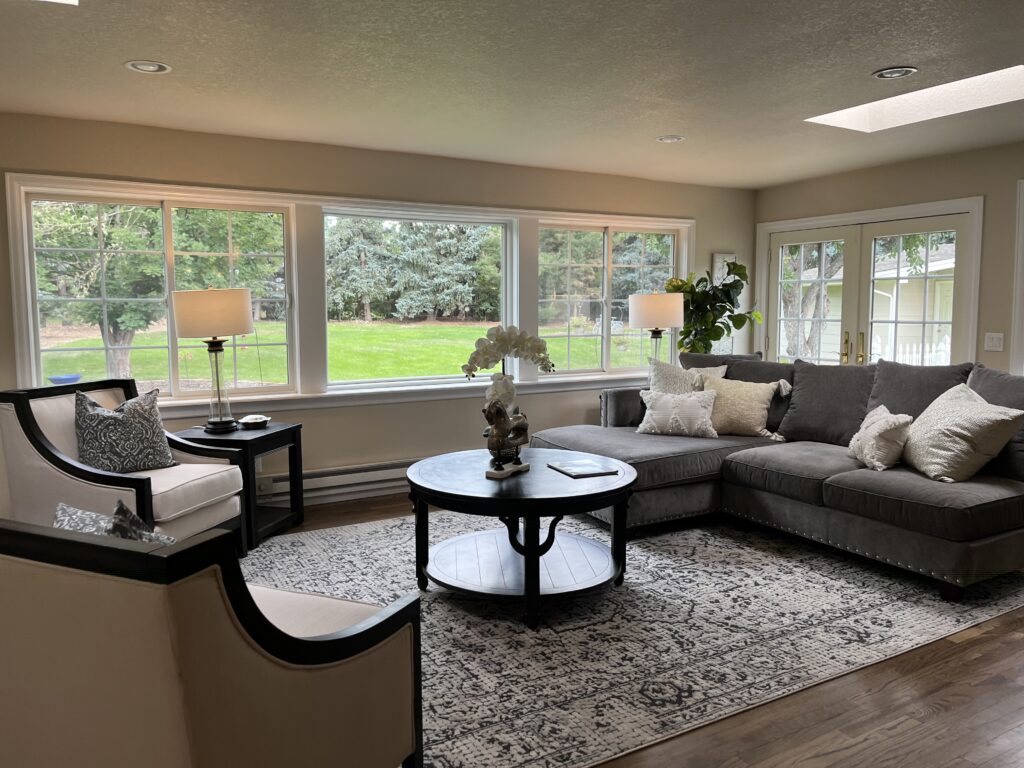
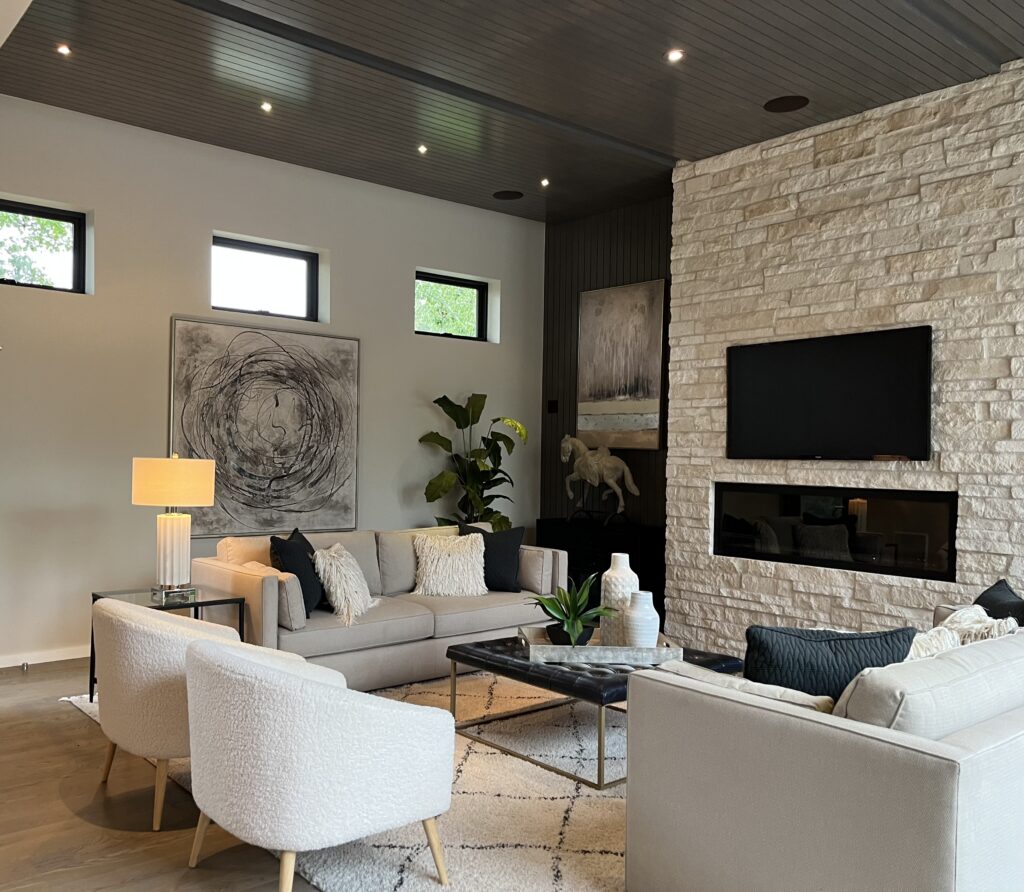
Vacant staging fixes this before the photographer arrives, not after. Warm-toned rugs, layered lighting that you actually turn on, textiles that give the camera something to hold, and art that gives each wall a focal point. The difference between a staged and unstaged winter photo set is not subtle, and it is the single highest-leverage thing you can change about a listing that is already priced right.
What vacant staging costs in Denver
Vacant staging runs $3,000 to $6,000 and up for a whole home, versus $1,000 to $3,000 for an occupied home where the stager works with existing furniture. The gap is inventory volume: on a vacant property, every item comes off a truck, and furniture rental alone can reach $2,000 a month on a large home.
You do not have to stage all of it. On a vacant listing, we routinely stage five or six rooms and leave secondary bedrooms and the basement alone. The main living space, the primary suite, the dining area, the entry sightline, and one flex room will carry a listing. Our full Denver staging cost breakdown walks through the per-room math.
Weigh that against the alternative. A vacant listing that sits an extra 45 days costs you the mortgage, the utilities you are heating an empty house with, the insurance, and, most expensively, the price reduction you eventually make because the days-on-market number has started answering for you.
Winter staging is a logistics problem, not just a design problem
This is the part most people underestimate. Installing in a Denver January means:
- Weather windows. Snow days shift trucks. A stager without their own crews is at the back of somebody else’s queue when the forecast moves.
- Protecting the floors. Salt, slush, and a six-person install crew are hard on new hardwood. Runners, booties, and blankets are not optional.
- Heat. A vacant house kept at 55 degrees to save money is a bad showing and a risk to plaster, paint, and pipes. Set it at 65 while the home is listed and let buyers take their coats off.
- Short days. A crew that starts at 8 a.m. has good light until roughly 4 p.m. Installations that stretch past that get styled under work lamps, and it shows in the photos.
We run our own delivery, installation, and pickup crews out of a 15,000-square-foot warehouse in the metro, which is why our winter installs still turn in one to three days. When a storm moves a Tuesday install to Thursday, we reschedule inside our own calendar instead of waiting on a third-party freight window. Gallery
When to book
If you are listing between Thanksgiving and the end of February, book the install for 10 to 14 days before you want to go live, and shoot photos the day after the install rather than the same afternoon. That gives you a buffer for weather, a clean light window for the photographer, and time to fix anything the staging surfaces, and it always surfaces something.
If you are aiming at the spring market instead, book in January. Staging calendars in the Denver metro fill from mid-February onward, and the sellers who wait until March are the ones choosing from what is left in the warehouse. Check out our services
The short version
Winter buyers are serious. Winter light is not. A vacant listing has to do more work in December than it does in June, and empty rooms are the worst possible tool for the job.
If you have a vacant property going on the market this winter, tell us the address, the square footage, and your target list date and we will tell you what it takes to have it photographed and live inside two weeks. Contact
Frequently asked questions
Is it a bad idea to list a house in Denver during winter?
Answer: No. Winter buyers are fewer but far more motivated, because people shopping in December usually have a deadline. What changes is the conditions your listing performs under: short daylight, dusk showings, flat light, and bare landscaping. Those conditions punish empty houses specifically.
Should I stage a vacant house or just do virtual staging?
Answer: Virtual staging solves the photo problem and creates a new one. Buyers who tour the property after seeing rendered furniture experience the gap between the listing and the reality, and that gap reads as a bait-and-switch. Physical staging fixes both the photos and the showing. If budget forces a choice, disclose virtual staging clearly in the listing.
How much does vacant home staging cost in Denver?
Answer: Generally $3,000 to $6,000 and up for a whole home, versus $1,000 to $3,000 for an occupied property. The gap is inventory volume — on a vacant home, every item arrives on a truck, and furniture rental alone can reach $2,000 a month on a large property.
How many rooms should I stage in a vacant house?
Answer: Five or six. The main living space, the primary suite, the dining area, the entry sightline, and one flex room such as an office or nursery. Leave secondary bedrooms and the basement empty; nobody has walked away from a home because the third bedroom had no nightstand.
What temperature should I keep a vacant listing at in winter?
Answer: Around 65 degrees while it is actively listed. A house held at 55 to save money makes for a short, uncomfortable showing and puts paint, plaster, and pipes at risk. The savings are not worth the impression.
When should I book a winter staging install?
Answer: Ten to fourteen days before your target list date, with photography scheduled for the day after the install rather than the same afternoon. That buffer absorbs weather delays and gives you a clean light window for the photographer. Contact