
Most independent stagers do not fail at design. They fail at staging inventory If you have been staging in the Denver metro for more than a season, you already know the shape of the problem. The design work is the part you are good at and the part clients pay for. The rest of it, meaning the storage unit, the box truck, the two guys who cancel on install morning, the sofa that will not clear the stairwell, is what eats the margin and the calendar. This is a look at what that infrastructure actually costs to own, and what changes when you rent it instead.

The three costs that quietly own your business
Storage.
A stager with enough inventory to run three simultaneous jobs needs somewhere between 2,000 and 5,000 square feet. In the Denver metro, that is a commercial lease with a loading door, not a self-storage unit, and it is a fixed monthly number that does not care whether you booked one job this month or nine.
Transport.
A box truck with a lift gate, plus insurance, plus maintenance, plus the fact that it sits idle most days. Renting a truck per job seems cheaper until you price a Saturday in April, when every stager and every mover in the metro wants the same vehicle.
Labor.
This is the one that hurts. Install crews are hard to hire, harder to keep, and impossible to staff efficiently at the volume most independents run. You need six people on Tuesday and nobody on Wednesday. So you use day labor, and you spend the install teaching someone how to carry a headboard. Add those three and you get a business where the fixed costs are seasonal-proof and the revenue is not. January thru February is expensive. The beginning of the year is also slow.
What “staging resources” actually means
A resource partnership is a wholesale relationship. You keep the client, the design, the proposal, and the invoice. You rent the parts that are only expensive because they are underused. In practice, that breaks into four services, and stagers usually start with one and add the rest:
1. Inventory access
You pull from someone else’s warehouse instead of buying and storing your own. That means:
- You can say yes to a 5,000-square-foot vacant listing without owning enough sectionals to fill it.
- You can serve a $2 million Cherry Hills Village property and a $500,000 Arvada ranch in the same week without owning two full inventory tiers.
- You stop paying to store a dining set that has been out on a job twice this year.
The practical test of any inventory partner is depth, not catalog size. Can you get three matching nightstands on a Thursday, or is there one of everything and a photograph of the rest? Contact
2. Warehouse space
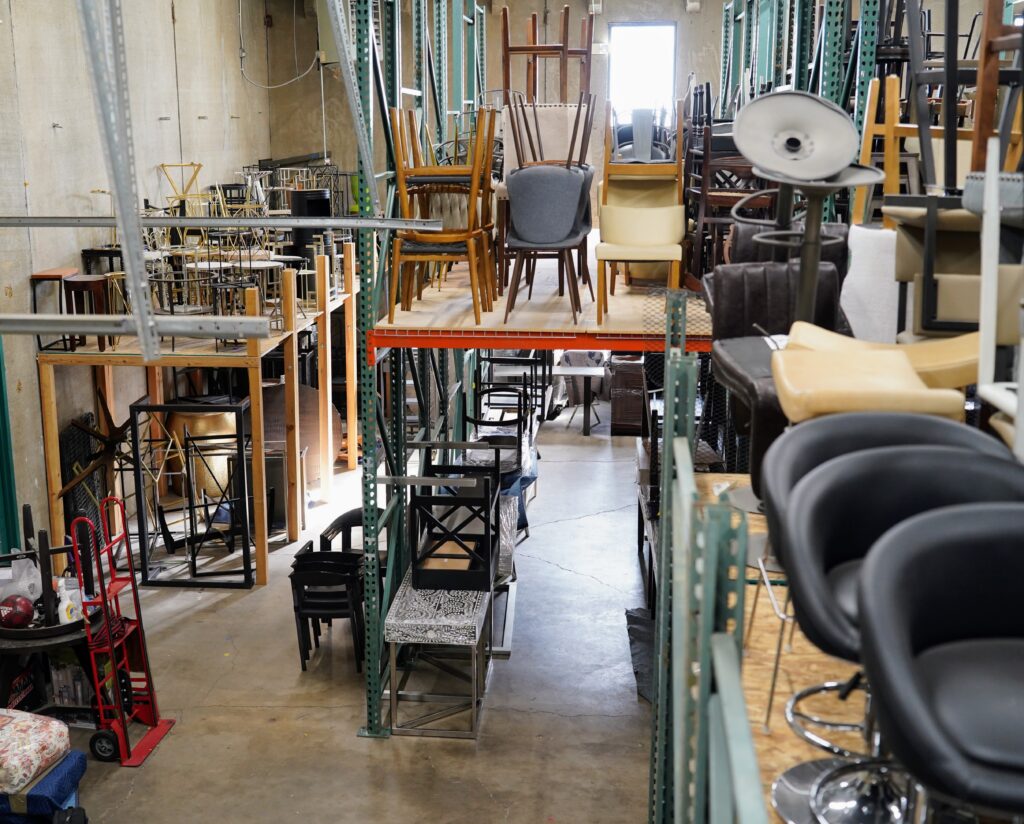
Some stagers do not need inventory. They need somewhere to put theirs. Shared warehouse space with dock access, racking, and a receiving process is dramatically cheaper than a standalone lease and does not require you to sign three years to get it.It also solves the problem nobody talks about: staging inventory that lives in a garage or a residential storage unit gets damaged, and damaged inventory is inventory you cannot bill for.
3. Delivery, installation, and pickup
This is the highest-value piece for most independents. A trained install crew that does this every day will place a full main floor in the time it takes a day-labor team to unload the truck. They know how to protect floors, how to get a sofa around a Denver square landing, how to shoot-proof a room so the photographer does not have to move anything, and how to pull the job cleanly at the end of the term. Turnaround is the metric that matters. We run one to three day installations out of our 15,000-square-foot warehouse with in-house crews, which means a partner can promise an agent a live listing by Friday and mean it.
4. Billing and contract support
The unglamorous one. Staging contracts, damage terms, extension billing, and collections are the administrative work that keeps stagers up on Sunday night. Having a partner who handles contract templates, term extensions, and invoicing takes a real number of hours out of your month.
The math, honestly
Here is the trade you are making. Renting inventory and crews carries a per-job cost that owning does not. Owning carries a per-month cost that renting does not. Owning wins when your utilization is high and steady. If your inventory is out on jobs most of the year and your crew is busy four days a week, you should own it. Renting wins in three situations, and most Denver stagers are in at least one of them:
- You are seasonal. Denver staging volume swings hard between the spring rush and the November-to February trough. Fixed costs in a seasonal business are a slow leak.
- You are growing past your inventory. The job that would double your year is the one you cannot physically fill. Turning it down to protect your storage costs is the most expensive decision in the business.
- You are scaling a second market. Boulder, Colorado Springs, and the mountain corridor are real markets. None of them justify a second warehouse on day one.
What to ask a potential partner
Not all of these arrangements are equal. Before you route a client’s job through someone else’s warehouse, get direct answers to:
- 1. Who owns the client relationship? If your partner also stages retail in your market, you need that boundary in writing.
- 2. What is real lead time? Not best case. What is the lead time in the first week of March?
- 3. How is damage handled? Who inspects at pickup, what is the standard, and what does a damaged item cost you?
- 4. Can I see the inventory in person? Warehouse tours separate the real operations from the catalogs. Gallery
- 5. What is the extension policy? Listings sit. You need to know the monthly extension cost before you quote your client, not after.
- 6. Do they install to photo standard? A crew that places furniture is not the same as a crew that styles for a camera.
Why we built this side of the business
We did not set out to support other stagers. We set out to stage our own jobs well, which meant buying inventory, leasing a warehouse, and hiring crews who do this full time. Once that infrastructure existed, other stagers, agents, and builders started asking to use it, and it turned out to be a better use of a warehouse than letting it sit half full in January. Today the resource side runs alongside our own staging and luxury design work. Partners pull from our inventory, store their own, book our crews, and lean on us for contract and billing support, and they keep their clients and their brand.
If you are running the numbers
If you are staging in the Denver metro and the constraint on your next twelve months is a truck, a warehouse, or a crew rather than a client, that is a solvable problem and it does not require a lease. Come see the warehouse. Bring your worst logistics month and we will tell you honestly whether a partnership fixes it. Contact
Frequently asked questions
Question: What does a staging resource partnership actually include?
Answer: Four things, and most stagers start with one: access to another company’s inventory, shared warehouse space for your own inventory, trained delivery and installation crews, and contract or billing support. You keep the client, the design, the proposal, and your brand.
Question: Does using someone else’s inventory mean sharing my client?
Answer: It should not, and you should get that in writing. A resource partner who also stages retail in your market needs a clear non-solicitation boundary before you route a job through their warehouse. Ask the question directly in the first conversation.
Question: How much warehouse space does a staging business actually need?
Answer: A stager running three simultaneous jobs typically needs 2,000 to 5,000 square feet with a loading door and racking — which in the Denver metro means a commercial lease, not a self-storage unit. That fixed monthly cost does not care whether you booked one job this month or nine.
Question: When does owning inventory beat renting it?
Answer: When utilization is high and steady. If your inventory is out on jobs most of the year and your crew is busy four days a week, own it. Renting wins when your volume is seasonal, when the job that would double your year is bigger than your inventory, or when you are testing a second market like Boulder or Colorado Springs.
Question: What should I ask before committing to a partner?
Answer: Six things: who owns the client relationship, what real lead time looks like in the first week of April rather than best case, how damage is assessed and priced, whether you can tour the warehouse in person, what the monthly extension policy costs, and whether the crew installs to photo standard or simply places furniture.
Question: Can interior designers use staging resources too?
Answer: Yes. Designers running one-off installs, photo shoots, or short-term merchandising often need inventory and crews without any interest in owning either. The arrangement is the same.
For more information please visit our Contact page.